
Modalities, Obstacles, and the State-by-State Rulebook
The lease-versus-purchase decision
Once a parcel is identified, every developer faces the same first-order capital structure question: lease or purchase. The decision is not a matter of preference; it is dictated by the technology being built, the lifespan of the asset, the lender’s collateral requirements, and the social geography of the host community. For utility-scale solar and wind, leasing is overwhelmingly dominant. The reasons are economic and cultural in equal measure. Economically, a long-term lease — typically 28 to 30 years, co-terminus with the Power Purchase Agreement — converts a massive upfront capital expenditure into a predictable annualised operating expense. This single substitution can improve a project’s internal rate of return by 200 to 400 basis points and free liquidity for module procurement, tracker installation, and balance-of-system spend.
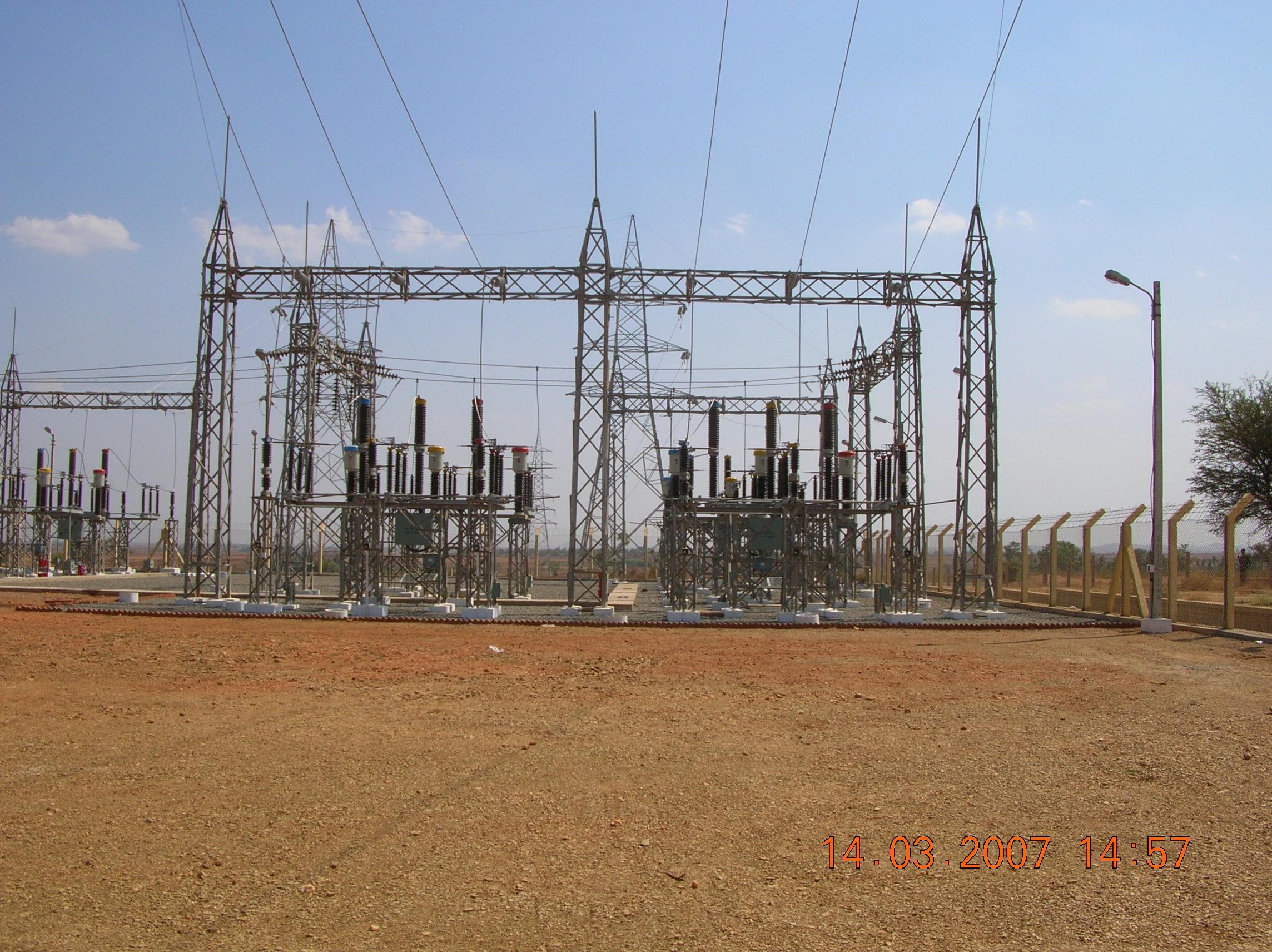
Leasing also elegantly circumvents state agricultural ceiling acts. Because the corporate developer never takes absolute title, anti-hoarding statutes designed to prevent zamindar-style accumulation are not triggered. Most importantly, leasing addresses the deepest psychological barrier in rural India: the fear of permanent dispossession. Land in agrarian communities is not merely a productive asset — it is a cultural, ancestral, and identity-bearing institution. Twenty-eight-year leases that preserve title while delivering a guaranteed dividend convert resisting landowners into vested economic stakeholders. Outright purchase remains preferred — and often mandatory — only for high-density, long-life infrastructure: pooling substations, transmission tower bases, and standalone BESS facilities that must outlast the original PPA. For these assets, freehold ownership delivers maximum collateral value and eliminates the long-term holdout risk of lease renegotiation.
Five obstacles that delay every project
The obstacles to acquisition are remarkably consistent across states and technologies. The first is fragmentation. Generational inheritance under Hindu and Muslim personal law has subdivided historical landholdings into micro-parcels: assembling a contiguous 1,000-acre block for a single solar park can require negotiations with several hundred individual titleholders. The transactional complexity is exponential, not linear — each additional negotiation is a new chance for a holdout, an undocumented heir, or a pending civil dispute to surface. The second is defective title. While DILRMP digitisation has narrowed the problem, legacy records remain plagued by clerical errors, undocumented familial disputes, and benami arrangements. A failure to identify a single minor co-heir during due diligence can produce a post-acquisition injunction that paralyses a multi-hundred-crore project for years.
The third obstacle is statutory NA conversion. Even where land is cleanly purchased, conversion from agricultural to non-agricultural use requires sequential approvals from revenue, town planning, and pollution control departments — a bureaucratic loop that, in the worst-performing states, consumes 18 to 24 months. The fourth is transmission Right-of-Way: even after the project parcel is secured, evacuation lines must cross intervening private land, where localised resistance, extortionate compensation demands, and physical blockades are common. The Ministry of Power’s June 2024 revision linked RoW compensation to market rates, fixed tower-base compensation at 200 percent of land value, and the corridor at 30 percent — an attempt to defuse confrontation that has shown early signs of working. The fifth is the LARR paradox. The Ministry of Environment classifies solar and wind projects under the White Category, exempting them from Environmental Impact Assessment to accelerate deployment. But LARR — operating in parallel — still mandates Social Impact Assessment where 400-plus families are displaced (200 in hilly or tribal areas) and an 80 percent consent threshold for private acquisition (70 percent for PPP). Most large solar parks, including Pavagada, have been built around this contradiction by structuring acquisition as a lease through a state-owned SPV, since lease arrangements fall outside LARR.
The state-by-state rulebook
Because land is a state subject, no national playbook substitutes for state-specific knowledge. Gujarat operates the most centralised, developer-friendly mechanism in the country. The state Revenue Department directly allocates government wasteland at concessional rates through a single web portal, and the policy uniquely permits conversion of existing standalone solar or wind plants into hybrid projects without fresh acquisition — a flexibility that has materially accelerated Khavda’s build-out. Andhra Pradesh routes acquisition through the New and Renewable Energy Development Corporation (NREDCAP). When private land is leased through the state aggregator, the policy mandates a split annual remittance: ₹25,000 to the landowner and ₹6,000 to the state treasury, totalling ₹31,000 per acre. Developers also pay a one-time Local Area Development Fund of ₹50,000 per acre, embedding community welfare directly into the acquisition cost.
Rajasthan governs allocations through the Rajasthan Land Revenue Rules, 2007, and uses fiscal filtering to weed out non-serious applicants. Developers must register with the Rajasthan Renewable Energy Corporation (RREC) and post substantial security guarantees (₹1 lakh per MW for projects under 2,000 MW) that are forfeited if developmental milestones are missed. New land registration rules introduced in 2024 reportedly added eight to ten percent to land costs and produced development delays that lenders have begun to price into Rajasthan-specific term sheets. Karnataka, operating through KREDL, pioneered decentralised land pooling and offers a procedural advantage that none of its peers match: deemed conversion. If the bureaucracy fails to process NA conversion within the statutory timeframe, the land is legally deemed converted, allowing developers to maintain execution schedules without being held hostage by administrative inaction.
Stamp duty regimes vary as widely as procedural ones. Punjab, Haryana, and Uttar Pradesh extend complete 100 percent stamp duty exemption for renewable acquisitions; Madhya Pradesh offers 50 percent; Rajasthan requires developers to pay 25 percent; and most other states have yet to introduce any exemption. Across a 1,000-acre transaction, this differential alone can represent ₹20-40 crore of variance — material enough to alter project siting decisions at the margin.
How the system fights back: structural and technological solutions
Three solutions have emerged to neutralise the friction documented above, and the renewable industry’s growth in the second half of this decade will hinge on how well it scales them. The first is the Solar Parks Scheme, administered by the MNRE. Under this framework, State Nodal Agencies acquire and develop massive contiguous parcels — Bhadla, Pavagada, Rewa, Ananthapuramu — equipping them with internal road networks, water supply, and pre-cleared transmission substations. Because the state acquires under eminent domain for a recognised public purpose, the LARR consent threshold does not apply. Developers simply bid for capacity allocations and receive de-risked, plug-and-play parcels. Gestation periods compress from five-plus years to under two.
The second is policy rationalisation of land ceilings. Recognising that modern high-efficiency modules and taller wind turbines need a smaller physical footprint per MW, states are revising allotment ceilings downward — Rajasthan’s recent move to four acres per MW being the leading example. This both prevents land hoarding by speculative developers and optimises the deployment of state land banks. The third is technological substitution through New and Innovative Solar Applications (NISA), which pursue land neutrality. Floating Solar Photovoltaics (FSPV) on existing reservoirs eliminate terrestrial acquisition entirely: the Omkareshwar Floating Solar Park on the Narmada has commissioned 278 MW of an eventual 600 MW, Ramagundam (Telangana) operates 100 MW, and Kayamkulam (Kerala) operates 92 MW. India’s reservoirs offer an estimated 280 GW of FSPV potential, almost all of it bypassing the acquisition machinery entirely.
Agri-photovoltaics is the second NISA pillar. By elevating modules four to six metres above ground, AgriPV permits concurrent agricultural cultivation underneath. India now has 22 operational pilots and three under development; Land Equivalent Ratios above 1.5 are routinely reported. The India Agrivoltaics Alliance, formally launched in 2023, has grown to 40-plus members and is shaping policy alongside MNRE, the Ministry of Agriculture, and the Ministry of Rural Development. State-level annuities are emerging: Delhi offers participating farmers ₹8,333 per acre per month, Odisha ₹20,000 per acre per year. The economic logic is now clear — when the same hectare can deliver crop revenue, lease rental, and clean electricity, the political economy of acquisition changes fundamentally. Canal-top solar (Gujarat’s Narmada main canal pilot) is a third pathway. Together, these technologies are converting the land question from a binary acquire-or-fail decision into a layered set of options that progressively reduce dependence on conventional aggregation. Chapter 4 turns to the bankability and equity frontier — where these solutions must finally satisfy both institutional lenders and the host communities whose consent makes the entire enterprise legitimate.